How It Works
From your code to a live URL
Push from source
You wrote the app. Epinio handles the rest. One epinio push takes your
source code, archive, or container image and turns it into a running, routable
application. No Dockerfile to maintain, no pipeline to babysit, no YAML to hand-write.
Cloud Native Buildpacks detect your language and build a production image for you.
Bind what your app needs
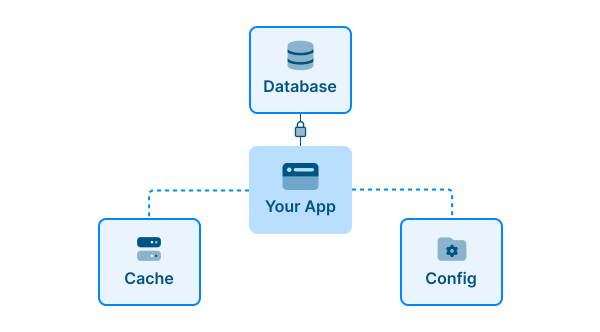
Apps rarely run alone. They need a database, microservices, a cache, an API key. With Epinio you provision a service from the catalog and bind it to your app in one step. Credentials and connection details are injected for you, securely, at runtime. Change a binding and your app picks it up. No secrets pasted into config files.
Your space, your apps
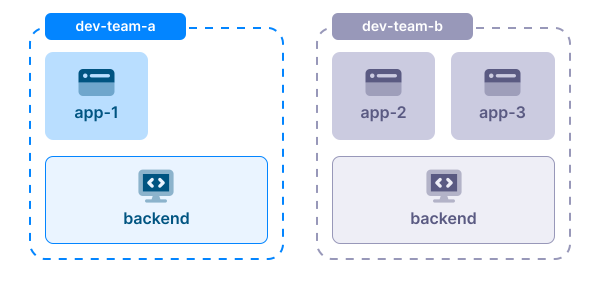
Working on three projects at once? Namespaces keep them apart. Your apps, services, and configurations live inside a namespace that is yours to organize. You see what is in your space and nothing you do collides with another team. Switch namespaces and you switch context cleanly.
Configurability when you need it
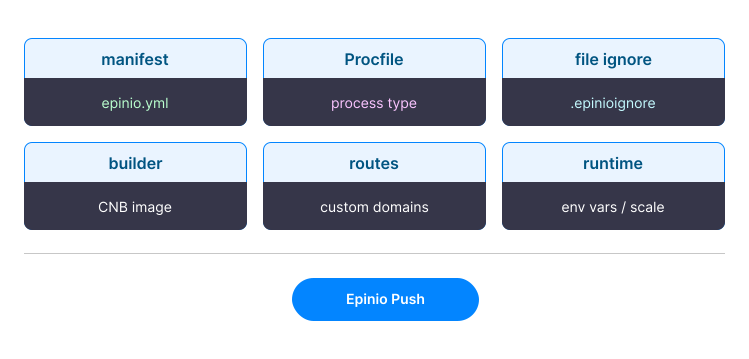
The one-push experience is the starting point, not the limit. When your app needs more,
the controls are right there, and never in your way. Reach for as few or as many as you
like. A bare epinio push still just works.
The push, behind the scenes
When a developer runs one command, Epinio orchestrates a full pipeline on your cluster. The Epinio API server receives the upload, hands it to a staging build that runs Cloud Native Buildpacks, pushes the resulting image to a registry, and rolls it out as a standard Kubernetes Deployment, Service, and Ingress. Everything a developer skips, Epinio does correctly, every time.
Native Kubernetes, no lock-in surprises
Epinio does not replace Kubernetes, it rides on top of it. Apps become ordinary
Deployments. Routes become Ingresses. Secrets stay Secrets. Everything Epinio creates
is inspectable with kubectl and governed by the same RBAC, network
policies, and observability you already run. Epinio installs via Helm and sits
alongside your existing stack.
Configured to fit your platform
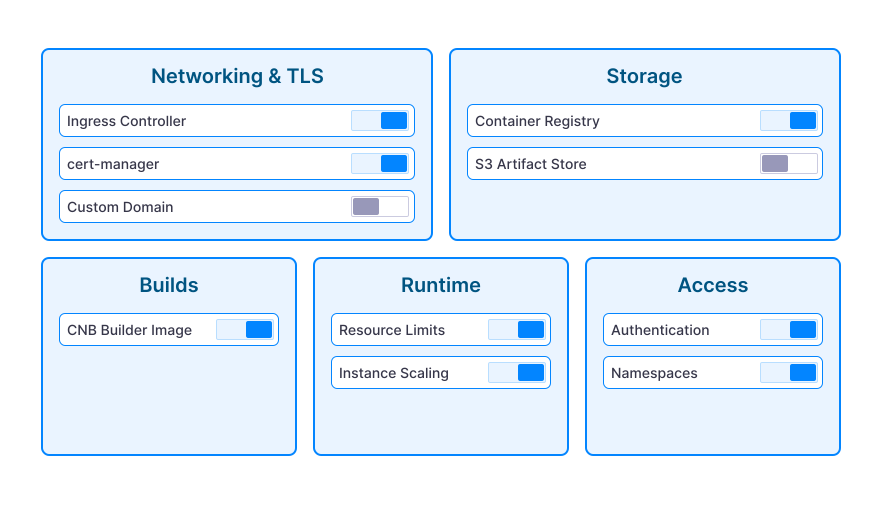
Epinio adapts to the cluster you already operate. Bring your own ingress controller and cert-manager, point at an external container registry or S3 store, choose your buildpack builders, set resource limits and scaling, and control access with authentication and namespaces. Sensible defaults to start, every knob available when you need it.